
PRP Hair Treatment: Is It Right for Your Hair Loss?
Hair loss can start in small ways. You may notice more hair falling than usual, a wider hair parting, a thinner ponytail, or less hair around the crown. For some people, hair becomes thinner slowly. For others, hair fall may increase within a few weeks or months.
The important point is that hair loss can have different causes. This is why starting a treatment without first understanding the reason may not give the expected result.
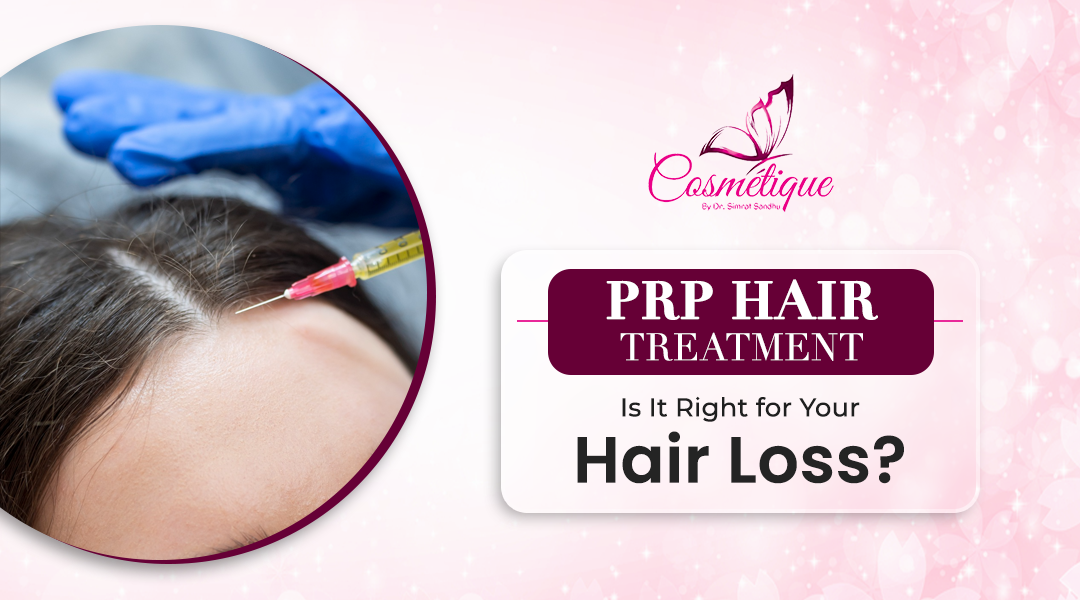
PRP hair treatment in Amritsar is one option used for certain types of hair thinning. It uses a concentrated part of your own blood and is injected into selected areas of the scalp. However, PRP is not automatically suitable for every person with hair fall.
What Is PRP Hair Treatment?
PRP stands for platelet-rich plasma. The treatment begins by taking a small amount of blood from your arm. The blood is then placed in a centrifuge, a machine that spins it at high speed to separate its different components.
The platelet-rich portion is collected and prepared for treatment. Small amounts are then injected into the areas of the scalp where hair thinning is present. Platelets are naturally found in the blood. They contain growth factors involved in healing and tissue repair.
In PRP treatment for hair loss, these platelet-derived growth factors are used to support the environment around existing hair follicles. Because the material comes from the person's own blood, PRP is known as an autologous treatment.
How Does PRP Work for Hair Loss?
To understand PRP, it helps to understand what happens when hair starts thinning. A healthy hair follicle repeatedly moves through phases of growth, transition and rest. In some forms of hair loss, particularly pattern hair loss, the follicles gradually become smaller.
This process is known as follicular miniaturisation. As the follicle becomes smaller, it may begin producing finer and shorter strands of hair. Over time, an area of the scalp can start looking less dense even though some follicles are still present.
PRP is used to support these existing follicles. The growth factors released by platelets may help with processes involved in follicle activity and the surrounding tissue.
This also explains why PRP is usually considered more useful when follicles are still active. It cannot be expected to create a completely new follicle in an area where functional follicles are no longer present.
Who May Be Suitable for PRP Hair Treatment?
PRP may be considered for people who have visible thinning but still have active hair follicles. It is commonly discussed in cases such as:
- Male pattern hair loss
- Female pattern hair loss
- Gradual reduction in hair density
- Thinning around the crown
- Hair strands becoming noticeably finer
- Early or moderate pattern-related hair loss
Suitability still needs to be decided individually. Someone with early thinning may have very different treatment needs from someone who has had advanced hair loss for many years.
A scalp examination helps identify the pattern, severity, and possible cause before PRP is planned.
Is PRP Suitable for Every Type of Hair Fall?
No. Hair fall is a symptom, not one single condition. For example, increased shedding may sometimes happen after an illness, major physical stress, nutritional deficiency, hormonal change or another medical problem. Certain scalp conditions can also contribute to hair loss.
In these cases, understanding and treating the underlying cause may need to come first. PRP also has limited value in an area where hair loss is advanced, and very few active follicles remain.
This is why a consultation should come before treatment rather than starting PRP simply because you are experiencing hair fall.
What Happens During a PRP Session?
A PRP session usually involves a few stages. First, blood is taken from the arm. It is then processed in a centrifuge so that the platelet-rich plasma can be separated from the other components of the blood.
The prepared PRP is collected in syringes. It is then injected in small amounts across the areas where treatment is required. The exact technique can vary depending on the treatment plan and the area of thinning.
Since injections are involved, mild discomfort may occur during the session. Some people can also have temporary tenderness or sensitivity afterward.
How Many PRP Sessions Do You Need?
PRP is generally performed as a course of treatment rather than as a one-time procedure. There is no single number of sessions that is right for everyone. The plan can depend on:
- The cause of hair thinning
- The extent of hair loss
- How long the problem has been present
- The condition of the scalp
- Previous hair treatments
- The response to earlier PRP sessions
After the initial treatment period, the scalp can be reviewed to see how the hair is responding.
Some patients may also be advised maintenance sessions later. This should be based on the individual response rather than following the same schedule for every patient.
When Can You Expect to See a Change?
Hair growth is slow, so PRP results are not immediate. Any change needs time to become visible because treated follicles still have to move through their normal hair-growth cycle.
The first change some patients notice may be reduced shedding. Changes in density or thickness usually take longer to assess.
One person may notice a clear improvement in hair density, while another may have a smaller response. The starting condition of the follicles makes a difference. PRP should therefore be viewed as a gradual hair treatment rather than a quick fix.
What Is the PRP Hair Treatment Success Rate?
People often search for the PRP hair treatment success rate before booking a session. There is no single percentage that can accurately predict the result for every person.
PRP studies do not all use the same preparation method, platelet concentration, treatment schedule, or method of measuring hair growth. Patients in these studies can also have different types and stages of hair loss.
Because of these differences, quoting one universal success rate can be misleading. A better question is whether your type of hair loss is likely to respond to PRP.
The answer depends on the diagnosis, how advanced the thinning is, and whether active follicles are still present in the treatment area.
What Results Can PRP Provide?
The aim of PRP is usually to support existing hair and improve the condition of follicles that are still functioning. Depending on the patient, treatment may help with:
- Hair density
- Hair thickness
- Progressive thinning
- Overall appearance of existing hair
PRP may also be used alongside another hair loss treatment when required. The complete treatment plan should address the cause of hair loss rather than relying on one procedure alone.
Are There Any Side Effects?
Since injections are made into the scalp, temporary local reactions can occur. These may include:
- Mild redness
- Tenderness
- Swelling
- Scalp sensitivity
- Minor discomfort at the injection points
These reactions are generally related to the injection process itself. Your medical history should still be discussed before treatment. Certain blood disorders, active infections, scalp conditions, or medicines that affect blood clotting may influence whether treatment is appropriate.
What Is the PRP Hair Treatment Cost?
The PRP hair treatment cost can vary from patient to patient. Cost may depend on the number of sessions required, the treatment area, the preparation method, and whether PRP is being combined with another treatment.
For this reason, looking only at the price of one session may not give you a clear idea of the complete treatment cost. A consultation provides a better estimate because the treatment plan can first be decided according to your hair and scalp condition.
Choosing PRP Hair Treatment in Amritsar
The first step should be a proper hair and scalp assessment. Do not choose PRP simply because it is a popular treatment or because someone else experienced good results with it. Your pattern of hair loss may be different.
People searching for PRP hair treatment near me should also look at how the clinic approaches diagnosis, treatment planning, hygiene and follow-up care. A good consultation should explain why PRP has been advised, what it can realistically achieve and whether another treatment may also be required.
PRP Treatment Plan
Dr. Simrat Sandhu assesses the pattern and extent of hair thinning before recommending treatment. The aim is to determine whether PRP is appropriate for the remaining follicles and whether other factors may be contributing to the hair loss.
If you are looking for a cosmetologist in Amritsar, it is useful to choose a practitioner who considers the cause of hair loss before deciding on a procedure. You can also learn more about PRP therapy and how it may fit into an individual hair treatment plan.
PRP Hair Treatment at Cosmetique
Cosmetique by Dr. Simrat Sandhu offers hair treatments based on individual scalp and hair concerns. PRP may be advised when appropriate, or it may be part of a wider treatment plan.
If you are searching for the aesthetic clinic in Amritsar, focus on proper assessment, realistic expectations, and follow-up rather than choosing treatment only based on cost or promotional claims.
FAQs
Is PRP hair treatment good for thinning hair?
PRP may help selected patients with thinning hair, especially when active follicles are still present. The cause and stage of hair loss should be checked first.
Can PRP completely stop hair loss?
Not always. PRP may help support existing follicles, but the result depends on what is causing the hair loss and how advanced it is.
Does PRP grow new hair follicles?
PRP mainly works with follicles that are already present. It should not be expected to create completely new follicles in areas where they are no longer functioning.
How many PRP sessions are needed?
There is no fixed number for everyone. The treatment plan depends on the type of hair loss, its severity, and how the scalp responds.
Is PRP hair treatment permanent?
PRP does not permanently remove the underlying tendency toward hair loss. Some patients may need ongoing treatment or maintenance depending on the condition causing their thinning.
Is PRP hair treatment painful?
PRP may cause mild discomfort during injections. The level of discomfort varies from person to person.
How long does a PRP hair treatment session take?
A session usually takes around 30–60 minutes, depending on the treatment plan.
When can I see results from PRP hair treatment?
Results may become noticeable after a few months, depending on the cause of hair loss and individual response.