

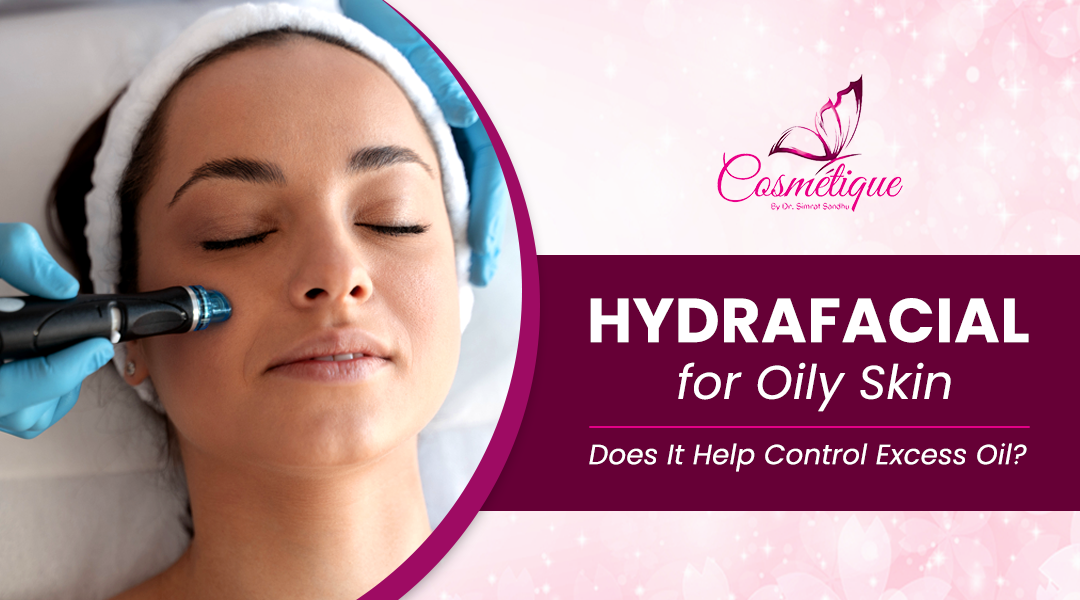
HydraFacial for Oily Skin: Does It Help Control Excess Oil?
Oily skin can look shiny soon after cleansing, especially on the forehead, nose, and chin. Some people also notice clogged pores, blackheads, or frequent breakouts along with the excess oil.
A Hydrafacial for oily skin can help clean the skin, remove pore buildup, and improve how congested skin looks and feels. However, it does not permanently stop the skin from producing oil.
In this blog, we explain how the treatment works, where it may help, and what people with oily skin should expect.
Why Does Skin Become Oily?
Oily skin develops when the sebaceous glands produce more sebum. Sebum is the natural oil that helps protect the skin and prevent excessive dryness.
Some people naturally produce more sebum than others. Hormonal changes, genetics, climate, skin care products, and acne-prone skin may also affect how oily the face feels.
Excess oil can mix with dead skin cells and other debris inside the pores. This may contribute to blackheads, whiteheads, and congestion.
What Is a Hydrafacial Treatment?
A Hydrafacial treatment is a non-invasive facial treatment that combines cleansing, exfoliation, extraction, and hydration.
The device removes dead skin cells and surface buildup while suction is used to clear material from the pores. Hydrating solutions are then applied to the skin.
For oily skin, the main focus is usually on cleansing the pores, reducing congestion, and removing excess surface oil without leaving the skin overly dry.
Does Hydrafacial Help Control Excess Oil?
A Hydrafacial for excess oil may help the skin look and feel less oily by removing surface sebum, dead skin cells, and material sitting inside congested pores.
Some solutions used during the treatment may contain exfoliating ingredients such as salicylic acid, which can help loosen oil and dead skin cells inside the pores.
However, Hydrafacial does not stop the sebaceous glands from producing oil. Oil production continues after treatment. The aim is to manage buildup and congestion rather than permanently reduce sebum production.
How Can Hydrafacial Help Oily Skin?
Hydrafacial may help oily skin in several ways by removing excess surface oil, clearing buildup from congested pores, and exfoliating dead skin cells that can make the skin feel rough or clogged.
Removes Surface Buildup
Cleansing and exfoliation remove dead skin cells, excess oil, and other material sitting on the skin. This can make the skin feel cleaner and smoother after treatment.
Cleans Congested Pores
The extraction step uses suction to remove material from the pores. This can be useful for people who regularly notice congestion, blackheads, or an oily T-zone.
Helps With Exfoliation
Selected exfoliating solutions may help loosen trapped oil and dead skin cells. This is one reason Hydrafacial for oily skin may be useful when oiliness is accompanied by clogged pores.
Adds Hydration
Oily skin still needs hydration. Using harsh cleansers or scrubbing too often can leave the skin irritated. Hydrafacial combines cleansing with hydration rather than focusing only on drying the skin.
Is Hydrafacial Suitable for Acne-Prone Oily Skin?
Oily skin and acne-prone skin often occur together, but they are not the same problem.
People with mild congestion, blackheads, or some acne may benefit from a treatment focused on exfoliation and pore cleansing.
However, Hydrafacial for acne-prone skin should not be considered a replacement for medical acne treatment when acne is persistent, inflamed, painful, or leaving scars. In these cases, the acne itself should be assessed before deciding whether a facial treatment should be added.
Who May Consider a Facial for Oily Skin?
A facial for oily skin may be considered when the main concerns include:
- Excess facial shine
- Oily T-zone
- Congested pores
- Blackheads
- Rough skin texture
- Dead skin buildup
- Mild acne-related congestion
The treatment should still be adjusted according to the skin. Someone with oily but sensitive skin may need a different approach from someone with thick, congested skin.
Can Hydrafacial Reduce the Appearance of Pores?
Hydrafacial can remove oil and debris from congested pores, which may make them look cleaner and less noticeable after treatment.
However, pores cannot be permanently removed. Their appearance is influenced by genetics, oil production, skin texture, and age.
One of the practical Hydrafacial benefits for oily skin is therefore better pore cleansing rather than permanent pore reduction.
How Often Is Hydrafacial Needed for Oily Skin?
There is no fixed number of treatments for everyone. The frequency may depend on:
- Amount of oiliness
- Level of congestion
- Presence of blackheads or acne
- Skin sensitivity
- Other skin treatments being used
- How the skin responds after treatment
Some people may use Hydrafacial occasionally for maintenance, while others may be advised to have more regular sessions.
Hydrafacial vs Regular Facial for Oily Skin
When comparing Hydrafacial vs regular facial, the main difference is how the treatment is performed. A regular facial may include manual cleansing, exfoliation, massage, masks, and extractions. The exact steps can vary.
Hydrafacial uses a device for exfoliation, suction-based extraction, and delivery of selected solutions. Neither option is automatically better for every person. The choice depends on oiliness, congestion, sensitivity, and other skin concerns.
Hydrafacial Treatment in Amritsar
If you are considering it, then it is useful to have the skin checked first. Excess oil may occur on its own or along with blackheads, acne, sensitivity, or dehydration.
At Cosmetique by Dr Simrat Sandhu, the skin can first be assessed to understand the level of oiliness, congestion, acne, and sensitivity. Dr Simrat Sandhu can then advise whether Hydrafacial is suitable or whether another approach may be more appropriate.
Frequently Asked Question
Q1. Does HydraFacial help reduce excess oil on the skin?
Ans. Yes, HydraFacial can remove excess surface oil, dead skin cells, and pore buildup. However, it does not permanently reduce sebum production.
Q2. Is HydraFacial good for oily and acne-prone skin?
Ans. HydraFacial may help oily, acne-prone skin by cleansing congested pores and removing buildup. However, persistent or inflamed acne may require medical treatment.
Q3. Can HydraFacial remove blackheads from oily skin?
Ans. Yes, HydraFacial uses suction-based extraction to help remove material from clogged pores, including some blackheads. Results may vary depending on the level of congestion.
Q4. Does HydraFacial make oily skin dry?
Ans. HydraFacial combines cleansing and exfoliation with hydration. It is not intended to dry out the skin, although some people may experience temporary irritation or sensitivity.
Q5. How often should you get a HydraFacial for oily skin?
Ans. The frequency depends on your skin's oiliness, congestion, and sensitivity. A skin professional can recommend a suitable schedule based on your individual needs.
Q6. Can HydraFacial reduce the appearance of large pores?
Ans. HydraFacial can remove oil and debris from clogged pores, making them appear cleaner and less noticeable. However, it cannot permanently shrink or remove pores.
Q7. Is HydraFacial suitable for sensitive, oily skin?
Ans. It may be suitable for some people with sensitive, oily skin, but the treatment and exfoliating solutions should be adjusted to their skin's needs. A skin assessment is recommended before treatment.
Q8. Where can I get HydraFacial treatment in Amritsar?
Ans.You can consult Cosmetique by Dr Simrat Sandhu in Amritsar to assess your skin concerns and determine whether HydraFacial is suitable for your oily skin.