
How to Get Rid of Acne Scars: Understanding Your Treatment Options
A lot of people can have acne scars, but it is not necessary that they have to go through the same treatments.
One may have a few deep, narrow scars. Another may have shallow dents spread across the cheeks. Some scars are even attached to tissue underneath, which makes the skin look pulled down.
This is why acne scar treatment starts with the scar itself. Before choosing a procedure, it helps to know what kind of scarring is actually there.
Is It a Scar or an Acne Mark?
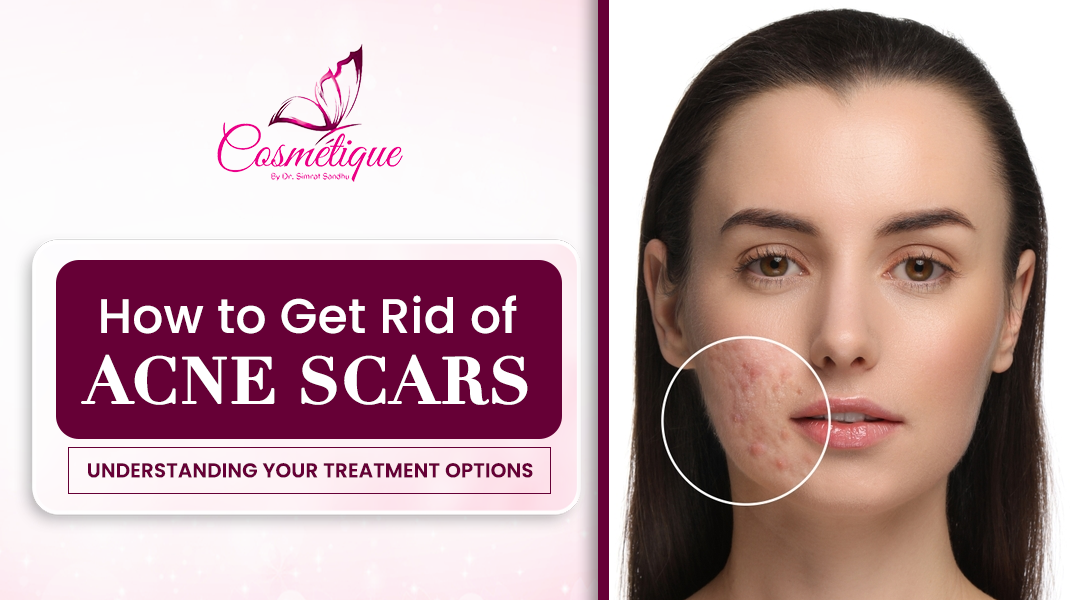
A brown or red spot left after acne is often called a scar, but it may simply be a mark. Marks change the colour of the skin; on the other hand, scars change the surface.
If the skin looks pitted, dipped, raised or uneven, there is more likely to be true scarring. This distinction matters because a treatment that fades pigmentation will not necessarily improve a dent in the skin.
Acne Scars Do Not All Look the Same
Doctors usually describe depressed acne scars as rolling, boxcar or ice-pick scars. Each type has a different shape and may respond better to certain treatments.
Rolling Scars
These have softer edges and can give the cheek a wavy appearance. Some rolling scars are held down by bands of tissue underneath the skin. If that is the case, simply treating the surface may not be enough.
Boxcar Scars
Boxcar scars are broader and usually have more visible edges. Some are shallow. Others are deeper. That difference can change the treatment considerably.
Ice-Pick Scars
Ice-pick scars look small from the top but extend deeper into the skin. Because they are narrow and deep, they often need treatment directed at the individual scar rather than the whole area.
Raised scars can also develop after acne. These behave differently because the scar sits above the skin rather than below it.
Which Treatment Is Used for Which Scar?
There is no single best acne scar treatment for every face. For rolling scars that are being pulled down, subcision may be useful. The treatment works below the scar to release the tissue holding it down.
Shallow boxcar scars may be treated with procedures such as microneedling, RF microneedling or fractional laser treatment. Deeper boxcar scars may need a more focused approach.
Ice-pick scars are different again. TCA CROSS may be used for selected scars by applying trichloroacetic acid directly inside them. Some deep scars may also be considered for punch procedures.
Raised scars are treated in another way altogether. Depending on the scar, options can include steroid injections or laser treatment. So, when people ask how to remove acne scars, the answer usually starts with: which scars?
What If You Have More Than One Type?
That is quite common. A cheek may have rolling scars in one area, a few boxcar scars nearby and some deep ice-pick scars as well.
In that situation, one procedure may not do enough. Subcision may be used where the skin is tethered. A focal treatment may be needed for deeper scars. Microneedling, RF microneedling or laser treatment may then be used for broader areas of uneven texture. This is one reason combination treatment is often discussed in acne scarring.
Scar Type Is Not the Only Thing That Matters
The doctor also needs to look at the skin around the scars. Skin type, scar depth, pigmentation tendency and the area being treated can all affect the plan. Previous treatments matter too.
Then there are practical things. How much downtime can you manage? Is your acne still active? What kind of improvement are you expecting? All of these can change the choice of acne scar treatment.
What If New Acne Is Still Coming Up?
It usually makes sense to control active acne first. Otherwise, you may be treating older scars while new breakouts continue to leave new ones.
Once the acne settles, the remaining scar pattern is easier to see. The treatment plan can then focus on what is actually left behind.
How Many Sessions Does It Take?
There is no standard number. Someone with a few deep scars may need a very different plan from someone with widespread shallow scarring.
Some treatments are done in a series. Others may only be used on a few individual scars. The number of sessions makes more sense after the scars have actually been examined.
Looking for Acne Scars Treatment in Amritsar?
If you are searching for acne scars treatment in Amritsar, look beyond clinics offering a single acne scar procedure. The more useful question is whether the doctor first identifies what kind of scars you have.
Rolling scars, boxcar scars and ice-pick scars do not behave in the same way. If several types are present, the treatment plan may need to reflect that. If you are unsure who to consult, you can read more about choosing the best skin specialist in Amritsar. At Cosmetique by Dr. Simrat Sandhu, acne scar concerns are assessed based on the type and severity of scarring before a suitable treatment approach is recommended.
Acne Scar Treatment with Dr. Simrat Sandhu
At Cosmetique by Dr. Simrat Sandhu, the scar pattern is examined before deciding on treatment. The depth of the scars, the type of scarring and the condition of the surrounding skin are considered together.
For some people, one procedure may be enough to start with. For others, different scars may need different approaches. The treatment plan is therefore tailored to the individual's skin condition, scar type and expected outcome.
FAQs
1. Why do my scars look fine in one mirror and much deeper in another?
Lighting can change the look of acne scars. Light coming from the side or directly above creates shadows inside depressed scars, making them look deeper. Softer light can make the same skin look much smoother.
2. I still have dark marks as well as dents. Are both treated the same way?
No. The dark marks are mainly a colour change, while the dents are changes in the skin's structure. You can have both at the same time, but they might need different parts of the treatment plan.
3. Does skin tone affect which acne scar treatment I can have?
It can. Some skin types are more likely to develop post-inflammatory pigmentation. This does not interfere with treatment, but it may affect the choice and manner of treatment.
4. How Can I Find the Best Acne Scar Treatment Near Me?
If you are searching for acne scar treatment near me, consider a clinic where the doctor first evaluates your scar type, severity and skin condition. Different scars may require different treatment approaches, so a personalised assessment can help determine which option is suitable for you.
5. My friend had good results with one treatment. Should I get the same one?
Not necessarily. Your friend may have had a completely different scar pattern. A treatment that works well for shallow boxcar scars may do little for deep ice-pick scars or scars that are tethered underneath. The best acne scar treatment depends on what is actually present in your skin.
6. Can acne scars completely disappear with treatment?
Acne scar treatments can significantly improve the appearance and texture of scars, but complete removal is not always possible. The results depend on the type, depth and severity of the scars, as well as how your skin responds to treatment.
7. How long does it take to see results from acne scar treatment?
The timeline varies depending on the type of scars and treatment used. Some improvements may become noticeable after a few weeks, while treatments that stimulate collagen production can take several months to show their full effect. Multiple sessions may also be recommended.
8. Can I treat acne scars while I still have active acne?
Active acne is usually addressed before or alongside scar treatment. Continuing breakouts can lead to new scars, so controlling acne is an important part of preventing further scarring while improving existing scars.