
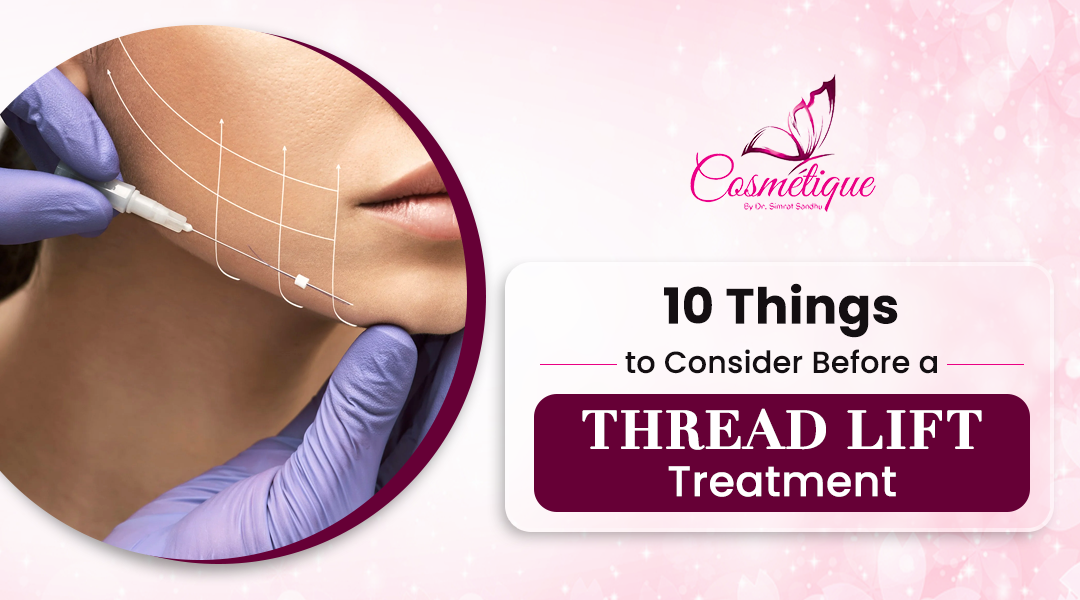
10 Things to Consider Before a Thread Lift Treatment in Amritsar
Sagging skin, reduced jawline definition and loose facial contours are common signs of ageing. As the skin gradually loses collagen and elasticity, the cheeks may begin to droop, the jawline may appear less defined, and fine lines can become more noticeable. A thread lift is a minimally invasive aesthetic procedure that can help address these concerns without traditional facelift surgery.
However, before opting for a thread lift treatment, it is important to understand how the procedure works, who can benefit from it and what results to expect. Factors such as thread type, treatment suitability, possible risks, recovery period and cost should be discussed during your consultation.
At Cosmetique by Dr. Simrat Sandhu, Amritsar, patients can explore aesthetic treatments such as mono and cog thread lifts to address facial sagging and improve facial contours. Understanding the procedure and available treatment options can help you have a more informed discussion with your aesthetic physician.
Here are 10 important things to consider before proceeding with a thread lift.
1. Understand What a Thread Lift Treatment Involves
A thread lift is a minimally invasive cosmetic procedure that uses temporary, absorbable medical threads to lift and support sagging facial tissues. These threads are placed beneath the skin using fine needles or cannulas.
Depending on the thread type, they may provide mechanical support to the skin and stimulate collagen production as the body responds to the threads.
A thread lift is commonly performed to address:
- Mild sagging around the cheeks.
- Loss of jawline definition.
- Loose skin around the lower face.
- Early signs of facial ageing.
- Mild sagging around the neck and eyebrows.
Understanding the procedure beforehand helps you decide whether it matches your aesthetic goals.
2. Check Whether You Are a Suitable Candidate
Not everyone with loose skin needs a thread lift. The treatment is generally more suitable for individuals experiencing mild to moderate skin laxity who want a subtle lifting effect without undergoing surgery.
You may be a suitable candidate if you:
- Have mild sagging around the cheeks or jawline.
- Notice early signs of facial ageing.
- Have reasonably good skin quality.
- Prefer a minimally invasive alternative to a surgical facelift.
- Have realistic expectations about the results.
People with significant skin sagging, very thin skin or certain medical conditions may require a different approach. An individual assessment is important before choosing a thread lift for sagging skin.
3. Learn About the Types of Threads Used
Different types of threads are available for facial lifting, and each serves a specific purpose. The choice depends on the treatment area, skin condition and desired lifting effect.
Some commonly used options include:
PDO Threads: Polydioxanone threads are absorbable threads that provide temporary tissue support and stimulate collagen production.
PLLA Threads: Poly-L-lactic acid threads are designed to support collagen stimulation and gradually improve skin firmness.
PCL Threads: Polycaprolactone threads are absorbable threads known for their longer degradation time compared with some other thread materials.
Threads may also have different designs, including smooth threads and barbed or cog threads. Smooth threads primarily support collagen stimulation, while cog threads have small projections that help anchor and lift the tissue.
Ask your aesthetic physician which thread type is appropriate for your facial concerns.
4. Understand the Thread Lift Procedure
Knowing what happens during the procedure can help you feel more comfortable before treatment.
A typical thread lift procedure involves the following steps:
- Consultation: The physician examines your facial structure, skin laxity and treatment expectations.
- Treatment Planning: The areas requiring lifting are identified, and suitable threads are selected.
- Preparation: The treatment area is cleaned and marked. Local anaesthesia is generally administered.
- Thread Placement: Fine needles or cannulas are used to insert the threads beneath the skin.
- Lifting and Adjustment: The threads are positioned to support the targeted tissues and improve facial contours.
The procedure usually takes around 30 to 60 minutes, depending on the number of areas being treated and the complexity of the plan.
5. Know the Expected Thread Lift Benefits
One of the main reasons people consider this treatment is its ability to improve facial contours without traditional surgery.
Some potential thread lift benefits include:
- Improved Facial Definition: Helps improve the appearance of sagging cheeks and jawline.
- Collagen Stimulation: Certain absorbable threads stimulate collagen production.
- Minimally Invasive Approach: The procedure does not require large surgical incisions.
- Subtle Lifting Effect: Can provide a refreshed appearance without significantly changing facial features.
- Less Downtime: Recovery is generally shorter than that of a surgical facelift.
Results vary depending on the thread material, treatment technique, skin condition and individual healing response.
6. Understand the Possible Thread Lift Risks
Although a thread lift is minimally invasive, it is still a medical procedure and may involve side effects or complications.
Some common temporary effects include:
- Swelling and bruising.
- Mild pain or tenderness.
- Tightness around the treated area.
- Temporary pulling sensations.
- Minor skin irregularities or dimpling.
Less common complications may include thread migration, thread visibility, infection, asymmetry or thread extrusion.
Choosing a qualified and experienced aesthetic professional is important to minimise avoidable complications. Discuss your medical history, medications and any previous facial procedures during the consultation.
7. Know What to Expect During Thread Lift Recovery
Thread lift recovery is generally shorter than recovery after surgical facelift procedures. However, the skin and underlying tissues need time to heal.
During the initial recovery period, you may experience mild swelling, bruising and tightness. These effects usually improve gradually.
Your physician may recommend:
- Avoiding strenuous exercise for the advised period.
- Sleeping on your back with your head slightly elevated.
- Avoiding excessive facial movements initially.
- Not rubbing, massaging or applying pressure to the treated areas.
- Following the recommended skincare and hygiene instructions.
Avoid dental procedures, facial massages and other treatments involving significant facial manipulation until your physician confirms they are safe.
8. Consider the Thread Lift Downtime
Many people choose a thread lift because it generally involves less downtime than traditional facelift surgery.
However, minimal downtime does not mean immediate recovery. Some individuals may experience bruising, swelling or tenderness for several days, while mild tightness or discomfort can persist longer.
Most people can resume light daily activities relatively soon, depending on their recovery. However, the timing of returning to work, exercise and social activities should be discussed with the treating physician.
If you have an upcoming wedding, event or important occasion, plan your treatment sufficiently in advance to allow for healing.
9. Ask About the Cost of Thread Lift
The cost of thread lift treatment in Amritsar can vary depending on several factors. There is no single price applicable to everyone because the treatment plan is based on individual facial concerns.
Important factors influencing the price include:
- Type and quality of threads used.
- Number of threads required.
- Number of facial areas being treated.
- Complexity of the procedure.
- Experience and qualifications of the treating professional.
- Clinic facilities and follow-up care.
During your consultation, ask for a clear cost estimate covering the procedure, recommended threads and follow-up appointments.
Rather than choosing a clinic based only on a lower price, consider the professional's experience, treatment approach and safety standards.
10. Choose the Right Aesthetic Clinic
The clinic you select plays an important role in your overall treatment experience. Thread placement requires an understanding of facial anatomy, tissue support and appropriate lifting techniques.
Before proceeding, check the following:
- Qualifications and experience of the treating professional.
- Experience with different thread types and techniques.
- Hygiene and sterilisation practices.
- Quality and authenticity of the threads.
- Clear explanation of possible complications.
- Availability of post-treatment guidance and follow-ups.
A detailed consultation should address your concerns, expected results, limitations and alternative treatment options before the procedure.
Why Consider Cosmetique by Dr. Simrat Sandhu for Thread Lift Treatment in Amritsar?
Cosmetique by Dr. Simrat Sandhu combines aesthetic expertise, personalised care and a range of facial rejuvenation treatments to address different skin and ageing concerns. Here are four reasons to consider the clinic for your thread lift treatment:
1. Expertise in Aesthetic Treatments
The clinic has trained cosmetic physicians and aesthetic professionals with experience in cosmetic procedures. Their understanding of facial anatomy and skin concerns supports appropriate treatment planning.
2. Personalised Treatment Approach
Every face has different contours, skin quality and degrees of sagging. Treatment plans are developed around individual concerns and aesthetic goals rather than following a standard approach.
3. Advanced Techniques and Comprehensive Services
The clinic offers mono and cog thread treatments along with Botox, dermal fillers, laser therapy and skin tightening procedures. Modern aesthetic technologies, including the DermaFuse system, are also part of its treatment offerings.
4. Patient-Focused Care
The clinic focuses on creating a comfortable treatment experience through consultation guidance, supportive staff and attention to patient concerns. Patient reviews and testimonials also provide insight into their experiences at the clinic.
Conclusion
A thread lift can be a suitable option for individuals looking to improve mild facial sagging, enhance jawline definition and achieve a subtle lifting effect without traditional facelift surgery. However, understanding the procedure, thread types, possible risks, recovery and treatment cost is essential before making a decision.
If you are searching for a thread lift near me or considering a thread lift treatment in Amritsar, consult an experienced aesthetic professional before proceeding. At Cosmetique by Dr. Simrat Sandhu, Amritsar you can discuss your facial concerns, understand the available options and explore a treatment plan suited to your aesthetic goals.Book a consultation today to discuss your concerns about facial sagging and explore suitable thread lift options in Amritsar.
Frequently Asked Questions
1. How long do thread lift results last?
Results vary depending on the type of threads, skin condition, age and lifestyle. The lifting effect is temporary, and the natural ageing process continues after treatment.
2. Is a thread lift painful?
Local anaesthesia is generally used to improve comfort during the procedure. Some tenderness, tightness or pulling sensations may occur afterwards.
3. Can a thread lift replace a surgical facelift?
No. A thread lift provides a more subtle lifting effect and is generally suitable for mild to moderate skin laxity. A surgical facelift may be more appropriate for significant sagging.
4. When can I see the results of a thread lift?
Some lifting may be visible immediately after treatment. Further changes associated with collagen production can develop gradually over the following weeks and months.
5. Is a thread lift safe for everyone?
No. Suitability depends on skin condition, medical history, facial anatomy and individual expectations. A professional consultation is necessary before treatment.